Showing posts with label math. Show all posts

Tuesday, December 1, 2015

You have small groups. Now what?

Hi, friends!  Happy Tuesday!  I'm sure that most of you are teaching right now, or maybe on your way to school still, but I'm sitting in the living room with our Christmas tree on and the twinnies are napping sweetly nearby.  I'm going to hit this hard and fast so we can be done before the boys wake up and I need another cup of coffee.  =)

If you've been following along at all, you know that I've been blogging lately about making small groups.  (I'd like to call it a series, but these posts have been so random and intermittent that I think series is too generous.)  In my last post here, I talked about how I made small groups.  So now I want to talk about what the heck you do with these small groups once you have them.  I think the obvious answer is that we all make small groups for SGI (small group instruction), so that you can give kids more targeted instruction, whether it's for reading or math.  What's less obvious is the best way to plan for SGI and actually run those small groups.

There are about a thousand ways to organize for SGI; most of them involve some type of work station, whether you're using Daily 5, Cafe, project based learning, or something else.  (To be honest, my previous literacy coach always pushed upper grades to do SGI during independent reading because she felt that was more authentic than work stations, but I think that's a little impractical in early grades, mostly because their stamina for independent reading doesn't match the amount of time you really want to spend with small groups.)  So, assuming you're balancing SGI with work stations the first thing you should decide is how often will you do SGI?  (For the record, I'm using SGI to refer to both guided reading and math,although I realize the process might not be the same for both.  We'll separate them out in a later post.  Fear not!)  Here are the three SGI schedules that I encounter most often.  I've used two of them myself.

SGI Plan 1 (this is what I used teaching first grade):  SGI occurs daily in reading, and almost daily in math.  Teacher sees all groups at least once a week, strategically choosing groups who might need extra sessions to see teacher multiple times.  Student rotation groups go to each work station once/week.  Pros to this style are that teachers see every single student at least once weekly, so you have a good feel for student progress, challenges, etc.  Cons:  If students are out the day you see them  you miss them for that week.

SGI Plan 2 (I used this teaching kindergarten):  SGI occurs daily, and 3 times/week in math.  Teachers see all groups daily (in reading), and each student within a week (math).  Pros:  Students gets lots of instruction targeted specifically for them and generally make pretty significant growth as a result.  Cons:  high work station churn; very difficult to run without 2 teachers in the classroom.    

SGI Plan 3 (I have never used this myself):  SGI only occurs several times per week (2-3), and teacher prioritizes students with highest needs.  Pro:  frees up classroom time for other aspects of instructional day.  Con:  students with high needs don't get as much targeted instruction.

I'd love to hear about which SGI lay out you use in your classroom.  I'm hoping to be back before the end of the week to talk about how I actually plan for SGI.  Have a great Tuesday, and don't forget to check out the TpT Cyber Monday & Tuesday sale!  Everything is 28% off until midnight tonight!  Start your shopping here!

Stay dry!
xoxo

Monday, August 4, 2014

Sale Time, Y'all!

Hello, friends!

Unless you don't follow any other blogs, I'm sure you already know that there's a HUGE Teachers Pay Teachers sale going on right now.  In most stores you can get almost 30% off.  (To be honest, the math confuses me a little.  Tpt gives 10% off with the code, and most teachers put their store at 20% off, but for some reason it only shakes out to 28% off.)  But still.  A discount is a discount, yes?

So if you're in the shopping mood, and heading back to school shortly allow me to make a few suggestions.

I use these data folders weekly, usually starting after the first six weeks of school.  I send them home on the same day each week (one year I did Tuesdays, and one year I did Wednesdays).  Students create a graph to show their scores on a quick weekly check-in.  I used assessments that monitor fact fluency, because that was a first grade power standard in my school, and a quick Fundations check-in for whatever unit we were currently studying.  I also had students write a note to their families about their work that week, and I had parents sign a sheet saying that they had looked over the folder with their students.  They also had to make a comment, which ultimately showed whether or not they had actually looked over the folder.  

I also have several bundles of math tasks in my store.  Math tasks are basically really open-ended word problems, but they usually have multiple correct solutions.  I've blogged about math tasks in the classroom herehere, and here.  But even if you're running a more traditional math block these tasks still definitely can be used to push your kids' thinking.  I have some tasks that focus on place value, as well as addition and subtraction.

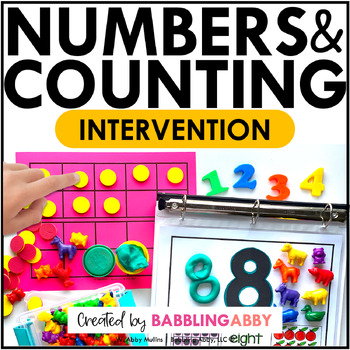
This is the last product I'll highlight today.  This is a quick, informal check-in that I created for students struggling with rote-counting and number sequence.  I used it with first graders who were below grade level, and I definitely think it would also be helpful for kinderbabes as well.  It assess rote counting, number id (to 30), and 1-to-1 correspondence.  I would give my strugglers this assessment every time we finished a targeted unit to see if they were picking up the skills I was hoping for/making progress towards those fundamental skills they needed to shore up.  It was also helpful data when I took them to student support team meetings.  With the sale it's under $1.00.  It's a win-win.  =)  

One last reminder--during the TpT sale you can also use your credits that you get for reviewing products.  So if you've recently purchased items make sure you go back and give feedback to those sellers today so that you can use some credits towards your purchases during the sale.  

Have fun filling your cart!
xoxo

Wednesday, May 28, 2014

The times. They are a-changing.

Hello, friends!

Every time I start to type a post on my sad little blog I make all types of resolutions about how I'm going to be better.  It's just so tricky for me to find that balance during the school year.  It's at the very top of my summer to do list, and I'm hoping to find lots of inspiration in the relaxation (or crazy busy-ness) of the summer.

I'm here today to share some incredibly exciting news.  (Well, at least it's incredibly exciting to me.)  After 4 years with my current school, I decided to take a new position at a different school next year.  Teaching kindergarten!  Which is funny, because if you know me I always swore up and down that I would never go younger than first.  But, the school that I'm moving to has all the things I'm looking for, so I'm testing the waters of kindergarten, and I figure if I decide it's not for me I can probably adjust grade levels again in a year or two.  Right??  While I have no idea where/what I'm going to do with all the stuff I've accumulated over 4 years (no garage, live in an apartment), I am really excited for a new start in the fall.  It will be hard to leave the friends I've made over the past 4 years, but I'm pretty confident that I made the right decision.

Over the summer I'll probably start to transition to some more kindergarten based content, but I'm hoping to still share some first grade shenanigans.  I'm also planning to read Smarter Charts over the summer (I've heard a TON of great things about that book!)   In case you're not familiar, basically the author talks about how to make charts useful to kids by illustrating processes and making charts interactive.  

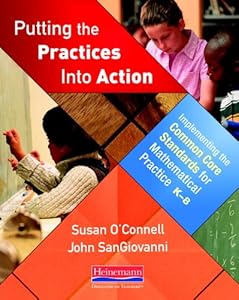
And I'm also planning to finish Putting the Practices Into Action, a great book about the SMPs (standards for mathematical practice) in the Common Core.  I actually got this book (an embarrassingly long time ago) at a PD and started it, but then got busy with school and didn't finish it.  I'm excited to go back and re-read/finish it because it has tons of actionable ideas for a variety of grade levels and it's a very easy read.
And in non-teacher related news, I'm planning to read The Fault in Our Stars.  Just because.  Should anything else be on my summer reading list?

Enjoy the rest of the week!
xoxo

Tuesday, May 13, 2014

A prize for teachers!

Okay, y'all.  I can't even really properly express how proud I am for actually doing some weeknight blogging.

I really think that I'm close to having some more closure on my life for next year, which is making me feel a little more zen.  Tonight I just wanted to share a super exciting treat that I'm sure other (nerdy) teachers will feel just as excited about.  I'm not sure how many of you are familiar with this amazing and super great math program called Splash Math.  It's available for K-5 and it's basically a self-paced math site that lets kids practice all their grade level standard.  I LOVE it because it auto-differentiates, and it collects data on each kid.  And, here's the best part!  Normally, because of how totally fab is, Splash Math charges you either per kid, or a particular amount for an entire class, but until the end of the year Splash Math! is giving you an entire class of kids, activities, and data tracking FOR FREE!  That's right, teacher friends--FREE!  You can sign up your entire class for the rest of the year using the link above.  It will guide you through the entire process of registering.

I hope you all enjoy the last few days, or weeks, of school with Splash Math.  =)
xoxo

Thursday, April 10, 2014

I did it!

Hello, friends!

We still have one more day of school before spring break, but I wanted to share a quick update.  As I mentioned in this moment of brutal honesty I've really been dropping the ball on math instruction for a few months and I vowed to do better.  (A coworker of mine is really fond of saying when you know better you do better.  And I definitely do so I am.)  So for the past month, basically, I've been assessing my kids 3 times a week and really trying to use that data to meaningfully group and reteach my kids.  One part that I've REALLY liked about this personal push is that I've been really pushing my highest math group much more often, and I'm really seeing growth out of them.  For example, right now we're in a unit on data, time, and measurement and I've been able to not only push my high group to create their own questions, data, and graph, but I was even able to teach them in a small group how to use a scale other than 1 on their graphs.  It's been so nice to be able to challenge my highest group, as opposed to constantly pushing up the lowest groups.  I'm sharing my skip counting by 5s on a graph activity with you, should you be interested as well--for before or after spring break.  =)  I've honestly never done this before, but if I understand technology correctly, you should be able to click this link and download the activity.

Enjoy your spring, friends!

Tuesday, March 18, 2014

Hey, there! Remember me??

Hello, sweet friends!

I hope that everyone is doing well!  It has been an insanely ridiculous amount of time since I have last updated this little blog of mine, but first we moved and then it took Verizon 138945309 years to install our internet.  (To be perfectly honest, we still don't have internet.  I'm staying at school late today because enough is enough.)

I don't know about y'all, but I am ready for spring!  We just had a snow day yesterday (Snow Patrick's Day), and I am about finished with the cold.  Mid-March is time for weather to start getting warmer and flowers to start blooming.  Not for 6 to 8 inches of snow to be dumped on my city.

So, I was inspired by the amazing Katie King (who you might know as the Queen of the First Grade Jungle) in this post to admit something to you all:  I have not been teaching math the way I should this year.  I've rationalized it a ton of different ways, but the bottom line is I need to raise the bar, both for my kids and myself. I'm part of a fellowship this year, and now in our third cycle we're studying formative assessment so for the rest of this math unit I'm going to assess my kids in some way every day--exit ticket, mini-quiz, journal response.  But every day I'm going to hit those kids with some type of check in and then I'm going to reteach the one who aren't getting it the very next day during math work stations.  I'll be trying to update the blog 2-3 times a week with details about how it's going, and hopefully some freebies that you can use as well in your own class.  Hopefully we can all learn something.  I believe that teachers sharing ideas with each other makes everyone better.

I hope that you're all staying warm and getting ready for spring!
xoxo

Saturday, February 8, 2014

Five for Friday...on a Saturday...Again

Y'all, I really have the best intentions.  I always want to link up on Friday.  And then something always comes up, like delicious burgers and the Olympics Opening Ceremony.  Without any more babbling, here's my Five for Friday.  =)
                                                  

ONE
At the very top of my bloggy to-do list for much longer than I care to admit has been figuring out how to offer fan freebies on Facebook.  The other night I was finished with school work earlier than expected and wasn't falling asleep on my keyboard already so I thought that would be a great night to figure it out.  Even though I almost ripped my hair out trying to get it to work and may or may not have said some very unladylike things, I finally did.  Victory is mine!  I was feeling so darn excited, and no one else was around to appreciate said excitement.  So now I'm forcing you to share it with me. 

TWO
Every day after lunch, we come back to class for 15 minutes of Quiet Time.  I always tell them that it's time for them to "recharge their brain batteries", but it also gives me 15 minutes to make a chart, give a sight word assessment, talk to another teacher, or whatever.  It's a win-win.  

Earlier this week, one of my little nuggets wrote me a letter during Quiet Time, and even put it an envelope that she folded and glued out of another piece of paper.  It included this picture, which I find funny for a few reasons.
a) I'm actually the smallest person in this picture.  b) I honestly think I've only been on the playground a few times with my nuggets this year, because I have lunch duty, not recess duty.  And c) there's no slide at our school playground.  Ah, youth.  

THREE
I blogged about this earlier this week, so I won't really talk about it much here, but I made this graph to share my students' Lexia levels and hold them more accountable.  You can read more about it here.  I'm going to add it to my fan freebie page, so you too can hold your students accountable for their work in Lexia.  


FOUR
I was noticing that a lot of my students were writing about math by writing about things that weren't math (I drew a book.  I drew a tree.  Then, I colored it in.) so on Thursday we made this Math Actions chart to have an idea about all the match actions we might do while problem solving.  I said that they should have one math action every time they write about math.  (I actually hate saying stuff like that, but I also generally find it helpful for the low middle-middle kids.)  Sorry this picture is a little blurry.  I couldn't figure out why that was until I realized (after I left school of course) that it was because the lights were off in my classroom at the time.

FIVE
Last but not least, we had our annual Superbowl party this past Sunday.  It was really fun, even though the game wasn't.  Mr. Spouse's birthday is in mid-January, and I had planned to make cupcakes to celebrate, but didn't have time before we went out of town and then I didn't want to make them when it was just the 2 of us because I would eat approximately 58% of the cupcakes.  And that's not necessary.  So I made them for the Superbowl party instead, when we were guaranteed to have some friends around.  And then, as I was thinking about how best to serve them, I remembered that I had this.  That we got as a wedding present.  You know, 16 months ago.  
Better late than never, right?  I felt like I was classing up the Superbowl.  =)

Alright, friends.  Thanks for dropping by and listening to me ramble.  Have a great weekend!
xoxo

Tuesday, February 4, 2014

#teachertalktuesday

Yes, I know that's technically the hash tag that everyone is using on Instagram on Tuesdays, but I just feel like that's the most connected thread of this little blog post.  I'm just sharing 2 quick things, then I'm going to work on (FINALLY) creating a new product for the ol' store.

First, this happened today.
We were working on modeling word problems using pictures, and the small group at my table literally couldn't solve this problem because they did not buy into this "save the cookies for later" idea in the problem.  Finally, I asked them what they thought happened to the cookies.  They said I ate them all!  What?!  So that's how our picture ended up like this.  Not really the picture I was planning to draw, but hey.  That happens sometimes in the first.  

Secondly, I've been meaning to do this for a while, and I finally did it.  (victory fist pump here)  
It's a little hard to tell in this picture, but this is a graph of my student's current Lexia levels.  Honestly, I had never heard of Lexia until this year, when my school started piloting Lexia for our district.  Basically, Lexia is a research based reading program that hits all areas of reading (except writing).  What I really LOVE about Lexia is that it auto-places kids automatically the first time they log in, so they're automatically placed at the level appropriate for them, regardless of grade level, so it's inherently differentiating for each student.  It also highlights kids who need a specific lesson, and it gives you the exact lesson that they should be taught.  I would say the one thing that I love the least about Lexia is that sometimes my students have a hard time with the vocabulary activities, mostly due to exposure.  For example, Lexia will say something like "find the picture that matches 'enormous'", and they might choose the wrong picture, but if it had said "choose the picture that shows 'huge/large/very big" they would immediately know it.  In any case, I'm planning to add this to my Facebook Fan freebie page, in case you use Lexia, too.  (I figure I can't be the only one, right?)

Okay, friends.  My next goal is to show you how we're using math binders this year, but that means I have to remember to actually take pictures of said math binders.  Don't hold your breath, friends.  =)  
Enjoy your night!
xoxo

Sunday, December 8, 2013

I have the best intentions.

Happy Sunday, friends!

Really, I have great plans every week to NOT just blog on Sunday nights, but then it seems that things constantly pop up during the week and then suddenly it's Sunday night again and I haven't blogged since the last Sunday.  :(  Whomp, whomp, whaaaaaaaaaaaaaaaaaaaaa.

Did you get lots of great stuff during the Cyber Monday sale last week?  I cleaned out my wishlist (mostly) and then made 1 impulse purchase.  (Darn you, Cara Carroll and your cute fonts!)  I'm really jazzed to start using this next week with my little nuggets who are struggling with their number sense.  This packet is chock full of superb activities designed to help littles identify number words, numbers, and the quantity that corresponds to a number.
I actually think that this RTI pack will tie in really nicely with this assessment that I created last week.  
I know that my assessment goes to 30, but as it's a baseline assessment (and I actually teach first, not kinder) I think that it will still match up and give you an accurate idea of what your firsties need to focus on.  Or, if you teach K you can just stop your assessments at 20, instead of going all the way to 30.  In fact, since it's the holidays and I've never given anything away before ever I'll give away this assessment to the first 4 people to comment on this post.  That's the way this works, right??  =)  Just comment and leave your email address and I'll send the assessment your way.   

I'm off to lay in bed and watch football.  I somehow pulled a muscle in my back.  Which is ironic since I haven't been to the gym or gone running in over a week.  Have a great start to your week, everyone!  (And if you're on the East Coast stay warm and safe!)

xoxo

Monday, September 30, 2013

Just Another Manic Monday?

Hi, friends

This is a super short it's past my bedtime, but I really want to share post.

First, I'm SO jazzed!  We finally were able to squeeze in yoga today for the first time this school year!  Two  years ago I wrote a Donors Choose project to get 25 yoga mats to teach my class yoga to help them self-regulate.  Plus, it's a really great way to expose them to an organized activity that isn't aggressive like football.  (Or deathball, as I sometimes like to call the recess version of football.)

And second, I wanted to share this brand spankin' new product with you.  I'm really having a hard time building my nuggets' number sense this year, so I felt like I needed to take a step back and teach them how to extend the counting sequence using tools.  I taught this lesson today and got really concrete, usable data back.  I'm feeling really happy about it.  Also, if you checked out my store yesterday you'll notice that I knocked 50 cents off the price so now this lesson is only $1.50.  I think that's pretty reasonable.

Have a great night!
xoxo,
Rachel

Saturday, September 21, 2013

Five for Friturday

Hello, sweet friends!  I'm linking up again with Doodlebugs for Five for Friday.  On Saturday.  Again.
                                                        fiveforfriday2

This week was a crazy week!  I got a new students on Wednesday, and it really turned our class upside down, so I'm taking some time this weekend to make 2 behavior plans.  But enough about that.  Without any more rambling here are my five randoms.
1.  Every day when I sign my morning message like this it feels so weird.
I got married last November, but didn't really push the name change last year.  My AP told me I needed to use my married name this year, so I keep trying to remember to tell people that my name is Mrs. Wilser, but every time I say that I feel like it's not real.  I feel like Mrs. Wilser is really my mother in law.  And my poor little nuggets are so confused about my name--some of them still call me by my maiden name (which totally doesn't bother me), some of them have fused  my maiden and married names together---Wilsener, and I have one poor little confused nugget who thinks I'm Ms. Willis.

2.  This week we launched our place value unit and we learned about number houses and how each digit has a place on Wednesday.  They really seemed to be on the same page with me and when I was walking around during math they seemed spot on.  Clearly, I didn't make it to this little nugget.  :(

3.  This week we also did our first science lesson!  I generally start science by talking about the scientific method and I do a few experiments with them that are super cool, but not necessarily connected to first grade science standards.  I do this chromatography experiment with them every year.  Basically, you just draw a big black dot on a coffee filter and get it wet so that the marker bleeds and you show them the different colors that are inside the black. It's always a crowd pleaser.  


4.  Today, I ran a 5K with my husband, a friend, and her boyfriend.  It was super fun, and I totally PR'd!  Average 10:33/mile.  Woot, woot!!  I was really proud of myself.  And I'm also feeling so thankful for the random stranger next to me who pushed me to my PR.  There was definitely a moment where I was ready to walk it out for a minute and this guy next to me said "Keep running.  You're pushing me, and we're going to finish this race together".  That is why I love running.  It was really awesome.

5.  On our way back from the 5K we stopped at the National Book Festival and I had to buy books for my classroom.  I don't know if you've ever read I Stole This Hat, but I literally laughed out loud in the book festival tent while I was reading it.  I love the Book Festival!  I'm also really jazzed to read the book How Do Dinosaurs Say I'm Mad?  It's a really great book about expressing your feelings, and what to do when you're angry.

Thanks for stopping by for my Five for Friday!  I have to hustle up now and get ready to watch the Michigan State/Notre Dame game.  I'll be back with some more from room 125 tomorrow or Monday.
xoxo
Rachel

Saturday, August 17, 2013

Short and Sweet

Hey, y'all!  I hope everyone's weekend is off to a great start!

I know some people are back in school already, but here in DC teachers go back on Monday.  I've already firmly vowed to myself that I will NOT go up to school this weekend...even though the mess I left in my room yesterday is threatening to give me an anxiety attack.  The weather here is beautiful this weekend, and I'm enjoying my last weekend of freedom.  =)

I just wanted to let everyone know that I'm participating in the huge TpT sale starting tomorrow, and with 20% off my store you can get several items in my store for under $1!

I think that  my next TpT project is going to be some guided reading planning materials.  Would that be helpful, or do you think that market is pretty saturated?

Happy Saturday!  =)

Friday, August 16, 2013

Teacher Tips

Two blog posts in under 12 hours?!  I know, I know.  However, if we're being totally honest this less represents my extreme commitment to Teacher Week and the fact that in preparation for PD next week I refused to allow myself to get back into bed after the hubs left for work.  I even made the bed so I wouldn't get into it!  But no one will be at school to let me in until 8:00am.  Which means that I have about an hour and a half to fill.  So you're getting a bonus blog post!  Once again, I'm linking up with Blog Hoppin's Teacher Week for their last day--teacher tips and tricks.  
Now, if we're being totally honest, I don't really consider myself a really tricky teacher, but I suppose I have learned a few things over the years.  I'm coming at you today with a really cool trick I learned last year from another teacher--data folders.  Previously, I blogged about my school's partnership with the Flamboyan Foundation in DC.  (You can check it out here if you missed it.)  Flamboyan has really been working with us on how to engage parents AND how to meaningfully share data with them. 

Last year, I went to a workshop after school hosted by Flamboyan about sharing data with parents and left with a ton of really great ideas.  The one that I liked the best and put into practice in my classroom almost immediately is data folders.  Here's the basic rundown:  You decide one day each week that these data folders will go home.  (I would not recommend Fridays because you really want them back the next day.)  I always do mine on the one day that we don't have a special because that gives us a little more time in class to get the folders ready.  So basically, you're selecting 2 goals that you're monitoring on a weekly basis and you're sending the data home to families each week, giving them information on how their students are progressing.  This is a little different from just sending home weekly assessment scores because you're really trying to track growth over time with these folders, so you're trying to assess the same skill (or group of skills) every week.  For example, last year I tracked my students' fact fluency scores because we took a fluency test each Friday and I also tracked their Fundations check-ups.  (I would give them a quick check-up, even if it wasn't in the plan for that week.)  Then, I can either grade them during a planning period or over the weekend and sort all the tests by kid so that they're reading to the put in the folder.  

There are 3 other really important pieces to the data folder that really bring this picture home to parents.  The first is the graphs.  You make a graph for math data, and ELA data.  You add in the benchmark line (where you want the kids to be; this is almost always 80% in my class) and then you have kids color in the graph to show their score.  This makes it really easy for parents to see where their students are, in relation to where we want them to be.  The second piece is the signature tracker.  Here, you're going to make a sheet with 3 columns.  One will be the date for each week when you send the folders home, the next will be a box for a parent to sign that they went through the folder, and last (and super important) is a comment box.  Parents MUST make a comment on the data.  They can really write anything in here that shows that they went through the folder.  I usually put a few suggestions at the top, like "So proud!" or "Way to go!" or "We need to practice short vowel sounds".  You just want to see by reading the comment that they went through the folder and looked at the data.  And the last piece (and the reason that I always do this on my no-special day) is that you have each kid fill out a form letter to their parents about their data for the week.  It's nothing fancy, just a little "Dear Mom/Dad/Grandma, I am feeling ____________________ about my tests this week.  Next week I want to ___________ (do better, do as well, study more, etc.) so that I can ________________ (get a treat, be smarter, know more math facts, etc.).  Love, ___________".  This whole process definitely takes some time to get rolling, but after the first few weeks this goes much more smoothly.  

Here's why I love the data folder:  you're sending home consistent information every week, so parents can't act surprised/won't be surprised when report cards come home.  I also love it because you can send extra information, like a note about increasing reading levels, but at the baseline they're getting weekly updates about the progressing their child is making in school in a really clear and easy to read format.  

Now, I've heard that there's a giant sale on everyone's favorite website this weekend, so I'm going to try really hard to have all the forms for this data folder up in time for this sale.  I wouldn't look for them before lunch time tomorrow, but that's the goal.  Have a great Friday!

Wednesday, August 14, 2013

The Fear


Y'all--I have the fear.  Big time.  You can get THE FEAR here.  Basically the fear stops you from being productive, and I'm being productive, but I'm too scared to go back to my classroom.  I'm feeling like I will never be ready for school, but just to let you know that I'm not totally screwing around all the time you can check out my first week plans.

Wednesday, July 31, 2013

Inverted Workshop Resources

Good morning, friends!  This week has been so bizarre-o and crazy.  I don't know how it happened, but somehow I've been acting like I'm in college again; staying up until 12:30 or 1:00am and then sleeping late.  It is not my most favorite schedule, but I'm having a very hard time breaking the cycle.

You're probably thinking by now that the only thing I know anything about is math.  That's only part true.  ;)  Before I wrap up this series on the inverted workshop model in case you were interested in learning more about it.  I'll recommend 3 books to you that I've found helpful while implementing this in my own classroom.                                                    Product Details
This book is excellent!  What I really like about this book is that it's divided by topic, so if you're looking for a good question to ask about measurement, for example, you can go to the measurement section and then within that section they'll have grade-level band questions AND they even tell you what to look for in student responses.  That was extremely helpful to me when I was first getting started and I wasn't totally sure what to be looking for.  This book is also really user friendly.  It's incredibly simple to just turn to the page you need, type the question up, and use it with your kids.
                                              
This book is much more dense, and I really like it, but I have to be honest--I use this book more in kind of a consultative way.  It's hardly ever the book I turn to first because there's just more information in it and sometimes all you want is an idea for your next math workshop.  =)  But when I do take the time to read an entire chapter at a time I also find this book really useful and generally come away with at least one new idea that I'm ready to try out.
                                                  Product Details
This book is super interesting; I actually got it at a math workshop that I attended this summer, so I haven't read the entire thing yet, but it's a really easy read and I find it really interesting.  This book actually focuses more on the Standards for Mathematical Practice (SMP) that come at the beginning of the Common Core and how to implement the SMP in your own classroom.  Even thought it's not directly about the inverted workshop there's a clear connection between the two.  Focusing on the SMP at the beginning of the year can help you implement a strong community of learners that will really embrace the inverted workshop.

That's it for me today, friends.  I am really starting to feel very nervous about back to school!  Here in DC teachers go back on August 19th and kids start on August 26th.  I feel like August 26th is going to be upon me in about 2 seconds I have SO MUCH to do before then, so I'm going to get to it.  Enjoy your day!  I'll be back tomorrow or Friday with some more ideas to share.  =)

Tuesday, July 30, 2013

Teaching at the End

Hello again, friends!  I almost said good morning, but the clock on my trusty laptop says it's 12:12pm, so I can guess that's not the appropriate greeting anymore.  I'm hoping to get accomplish lots of pesky goals today so I don't feel bad about going to the pool this afternoon.  I mean, it's 80 degrees and 40% humidity right now.  That NEVER happens in the DC summer.  And while I am very happy about the beautiful break in the otherwise oppressive summer it definitely makes it hard to do anything indoors. So let's get right down to it.

The biggest change, for me, with this inverted math model was teaching at the end.  When you do your launch at the beginning of the lesson you're just priming their brains for the job they have that day.  You're not really smacking them with any knowledge until the debrief at the end.  And what's even harder is when they collectively don't really get the idea on day #1 and you have to do the whole thing again the next day, or the day after that.

So as I mentioned earlier, at the beginning of your math block you'll have a 5-7 minute launch (potentially longer if you're teaching older kids) where you're basically reading the task, making sure everyone understands what their job is for that day, and potentially brainstorming some strategies.  You are NOT modeling an example, a similar problem, or showing them how to get started.  That's what they're figuring out with their partner.  Then they're spending all this time working and you debrief at the end.  During the time students are working you're circulating the room, observing and conferring.  I generally won't talk to my kids for the first 3 minutes or so of work time because it gives me a chance to see what they're really thinking and it gives them time to get started, and it breaks most of them out of the habit of using me as a crutch to get started.  Ideally, as you're circulating you're going to find a kid or 2 or 3 who are solving this problem in either a) the way you envisioned, b) a really cool way that you weren't thinking about but does work, or c) a rudimentary way that still works.  When you find a kid on target you want to ask them (or tell them) to share at the end.

Everyone runs their sharing differently, but during math mine basically works like this.  I would bring all the kids back to the carpet, and I will have the work of the kids who will share.  I'll generally praise the class for their hard work, because, really, this is hard work for kids who are only 6 or 7 years old.  Then I tell them that I want to show them what Mathematician X did that day.  I'll put that student's work up on the document camera and then I kind of take a step back and let that kid tell everyone else what he did.  I'll ask a few questions, but basically it's the kid's show at the point.  They get probably 1-2 minutes.  Then, I'm either going to bring up another kid who solved the problem correctly, but differently OR I'm going to jump in to wrap up.  My wrap up is really when I'm hammering that teaching home.  It's a mind-blowing light bulb time for them sometimes and it's so exciting to see their little math brains growing.  Basically, my wrap up is going to be a summary where I'm going to recap the work we saw and I'm going to leave them with a teaching point for future math work, sort of like the Lucy Calkins' writers workshop idea; something like "Today and everyday mathematicians, when you see a two digit number you'll know that that number is made up of tens and ones".  And then we're going to move on to something else in our day.

However, we all know that sometimes our first graders aren't exactly hitting the nail right on the head, and if that's the case then I'll just lead the share at the end.  I'll grab a blank sheet and model (quickly) how I would have done this problem, and model how I would think through the problem out loud.  Then, I'll finish with the same teaching point.  Again, the share, just like the launch is under 10 minutes.  5-7 is your best bet, because they were just working for so long.

It's so great when all these pieces come together and you have this full inverted workshop running in your classroom.  I really feel like students have a much deeper understanding of their math learning.

Sunday, July 28, 2013

Evaluating Inverted Workshop Math Products

Greetings, and happy Sunday, friends!  I don't know about you, but I'm really starting to feel the back to school pressure.  Which is why I was so happy when the weatherman predicted a gross Sunday, because it's much easier to convince the hubs that I need to spend a (summer) weekend working on school stuff when the weather is yucky.  And it doesn't hurt that we both shirked all adult-like responsibilities and went to the pool all. day. long yesterday.  It was glorious!  And then we acted like we were both 22 again and went out way too late last night with friends.  Whoopsie!  But all in all it's been a very fun weekend; I even made eggs benedict this morning (first time ever)!  You can start calling me Martha Stewart whenever you're ready.  ;)

Today, I want to talk about evaluating student work/products in an inverted math model, especially since it's much less cut and dry than a typical word problem.  Of course there are still answers that are right and wrong, but there's a lot of information you can learn from your students' work, even if their answer is ultimately incorrect.

Initially, I was using a simple check/check plus/check minus system to evaluate my littles' work during this time, but I really felt like it wasn't really meaningful for them or for me.  And if evaluation isn't driving future/forward progress then what's the point?  So I spent some time brainstorming and trying to think about what I really wanted out of my kids' work, and how I could communicate it to them in a kid friendly way.  I've always liked the idea of rubrics, but conversely also frequently had a hard time using them in a meaningful way in my classroom.  And then I was paging through this unit that I bought from Deana Jump and DeeDee Wills and they had a writing rubric inside that was based on smiley faces, which I thought was really brilliant, and it was sort of like the clouds parted and I had this flash of teacher brilliance:  I could use a similar evaluation system for the math work that I was doing with my kids.  But one thing that was really important to me is that my kids bought into the rubric, also.  So I brainstormed the things that I really wanted to make sure were included in the rubric, and then I sat my kids down on the carpet the next day for math and I told them that we needed to think about what the very best first grade mathematician work looks like, and what it looks like when you're not doing your very best work and this is what we came up with.

After we made this chart, we had an epic dance party because we spent so much time on the carpet making it, then I laminated it and it hung up in our classroom the rest of the year.  The next thing I did that I really think helped my kids have a clear understanding of the work at each level is that we evaluated some anonymous work together as a class.  We went over what different mathematicians produced and I asked them what symbol they would have put on it, and then I showed them what symbol I actually gave it.  We did this for about 2 or 3 days so that they really understood how to get smiley face exclamation point (which, by the end of the year, was one long word in our classroom--smileyfaceexclamationpoint).  I really feel like this rubric helped my students be clearer about the way I was evaluating their work, and it gave us all a common language to use around discussing our mathematical work.  It was great to see kids using the chart with their partners to think about what they needed to add to make their work even better.

For those of you wondering how I tracked the data across units, I'm here for you.  =)  I really tracked this data in 2 ways.  I would create a chart in word of the problems we were doing each week, and all my kids names and then I would just put the symbol they earned in their box.  This allowed me to look across the week and see if there was a student who really understood and should maybe be pushed harder, or if there was a student, or group of students who really didn't seem like they were understanding our content that week.  The other way I tracked it was numerically, in a grade book so that I could use these symbols to factor into my students' math grades at the end of the quarter.  I just used a 4/3/2/1 system, with the 4 being equivalent to the smiley face exclamation point, and the 1 being equivalent to the straight face.  I didn't use 3/2/1/0 because I feel like zeros can really wreck an average.  But you are, of course, the boss of you.

Honestly, I had planned to talk about evaluation and leading a share/debrief in the same post, but I feel like this is already a super long post, so we'll save leading the debrief for tomorrow.  And last but not least I am working hard at making my debut on Teachers Pay Teachers, and I'll be sharing the documents that I use in my own classroom to make this model work--planning guides, tasks that I've already written, blank rubrics for you to fill in, and maybe a quick how-to guide, if you think that would be helpful.  I hope to have all of those documents ready to go by this Wednesday.  If there's anything else you'd like to know let me know!  I aim to please.  =)

Enjoy the rest of your Sunday!
Rachel

Friday, July 26, 2013

More Math!

Friends!  Before I tell you more about this rad type of math that I'm working on I have to tell you what I did today.  (pause for dramatic effect)  I went running outside today for the first time today since the end of the school year.  It's been super nice out for 2 days in a row; normally DC is about 95% humidity in the summertime because the Founding Fathers decided to drain a swamp to build the nation's capital.  I felt like it was a sign that I should head outside for a run. When I opened my Nike+ app it totally shamed me.  It said "it's been 8 jillion days since your last run".  So embarrassing.  But then I did a 5K, and I didn't die so I'm going to go ahead and label that a success.

But back to this inverted math.  I'm pretty into it.  What I want to tell you about today is how crafting a task to use with this model is different from a standard or typical word problem.  I think one of the easiest areas to see this difference is in addition and subtraction.  So, when you teach a unit on adding and subtracting you're generally spending part of the time teaching students how to solve word problems.  A normal word problem might sound something like this:  "Mattison has 4 cookies.  James has 3 cookies.  How many cookies are there altogether?"  But when you're using the inverted model, you're going to write a task that is either open-ended, or has multiple answers (sometimes both).  Going to the original example, a task for this model on the same content might read something like this:  "In all, Mattison and James have 7 cookies.  How many cookies could each kid have?"  What you really want is a task that has multiple points of entry, and that kids could really spend a significant amount of time working to solve.  In this example, you could encourage kids to think about how many different ways they could put 2 numbers together to get 7.  It's also likely, in this example, that you would be pushing students to notice how turning numbers around represents a different problem.  I find that the easiest way to get started crafting tasks is by working backwards--starting with something more traditional or typical, and then thinking about how I could make it more open-ended or how I could turn it into a problem with multiple solutions.  One more piece that's important in this model is that students are generally using a combination of words, numbers, and pictures to show their work/thinking.  There's also a heavy emphasis on using labels, but I'll get into that more when I talk about evaluation and sharing.  

Another important part of this math model is that students are usually working with a partner, and that they almost always have a variety of tools available to them.  Obviously that implies that at the beginning of the year you're teaching your students how to work with a partner and use tools, but that's likely to be something you're teaching at the beginning of the year, regardless of the type of math you plan to use in your classroom.  Since you're also usually giving students a materials choice when using this model, you also have to help them figure out what tools are best for different tasks.  But I generally feel like these are things that smart teachers are doing at the beginning of the year, anyway, so I'm not going to waste your time talking about all of that here.

I'll be back tomorrow or Sunday (it's supposed to rain on Sunday) to talk about evaluating tasks and how the structure is different when you're teaching at the end, instead of the beginning of the workshop.  Happy Friday!

Wednesday, July 24, 2013

Brand Spankin' New!

I remember the very first teacher blog I read.  It was this lovely gem, right here, that I still read faithfully.

I actually found about this whole idea of teacher blogging from my mom.  She had mentioned to someone at her fitness classes that I was about to start teaching first grade, and they gave the website to my mom to pass along to me.  If we're being honest, I was skeptical at first.  I had never taught anyone as young as first grade before.  I was up to my eyeballs in preparation, and you wanted me to find time to read someone's blog?!  Which explains why I did not read said blog until mid-way of my first year of teaching first grade.  What an epic mistake.  It unlocked an unveritable treasure trove of ideas, resources, and headache easers.  I'm pretty sure I spent the next few hours bouncing from Fabulous in First to the brilliant ladies teaching first grade that you can find herehere, and here.  I truly believe that the blogs I first started following (and others that I've added along the way) have made me a better, and more creative, teacher.

Fast forward to now, and I'm getting ready to teach first grade for the third year in a row.  If you had asked me when I graduated from grad school what grade I thought I would be teaching it totally wouldn't have been first, but I have to say that I love those little firsties.  They're so darn adorable!  Which is why I have spent so much of my summer preparing for the school year, and why I am starting this blog.  I think that teachers sharing ideas with other teachers makes everyone better.  And that's the goal here--to share ideas, and to become better teachers all the time.

One thing that I've spent a lot of time learning about throughout the past 2 years, and this summer is this flip-flopped model of math (that goes by a thousand different names--inverted workshop, discovery math, and constructivist math are some of the ones I hear most often) where kids are working on solving really complex tasks and the onus of constructing meaning out of the work is on them.  It really changes the role of the teacher, in my opinion.  This model, which I tend to call either reverse or inverted workshop (because the learning comes at the end, rather than the beginning) really challenges students and teachers, and works in extremely well with the Common Core standards.

The basic idea is that you have a short launch with the kids (about 5 minutes), make sure everyone understands the task, and then you send them off to work.  And they work for a really long time--like 15-25 minutes (with one brief mid-workshop stop in the middle-ish)!  If you had told me I would get my kids working for 25 minutes on a math task before I started this model I would have told you you were living in a fantasy land!  But I won't tell you that anymore because I've done it with my kids, and that really is how long they work. =)  Then, you bring them to the carpet at the end and you share/debrief with them and THIS is where you're really teaching them rules/patterns/properties, etc. about math.  I've been using this model in a variety of capacities for about 2 years now, and I still think it's totally wild.  I really like it, but I also definitely think it has some limitations.  The biggest one, for me, is that some kids really don't (ostensibly) seem to make their own meaning, despite repeated exposure to the same idea or concept.  The biggest advantage to me, conversely, is that everyone can start the task in a place that's appropriate to their current understanding/level of learning.  So my questions are this:  have you ever tried a model like this?  Do you use it daily?  Would you try something like this?